

Waymo’s freeway expansion is more than a transportation milestone—it’s a glimpse into how AI is reshaping daily life. Autonomous vehicles combine machine learning, sensor fusion, and predictive modeling to make split-second decisions that rival or surpass human reflexes. As AI systems become embedded in mobility, healthcare, finance, and creative industries, they promise to transform convenience, safety, and productivity. Imagine reclaiming hours lost in traffic, reducing accidents caused by human error, and opening mobility to those unable to drive. At the same time, AI challenges us to rethink trust, ethics, and regulation in a world where machines increasingly act on our behalf. The freeway robotaxi is not just a ride—it’s a symbol of how AI could redefine freedom, efficiency, and human experience in the modern age.
Waymo was born in 2009 as the Google Self-Driving Car Project, a bold experiment to make roads safer and transportation more accessible. In 2016, it became Waymo, a standalone company under Alphabet Inc. Its mission has always been to develop fully autonomous vehicles capable of navigating complex urban environments without human drivers. Over the years, Waymo has tested its technology extensively in cities like Phoenix, where it launched the first commercial driverless ride-hailing service in 2020. insiderfinance
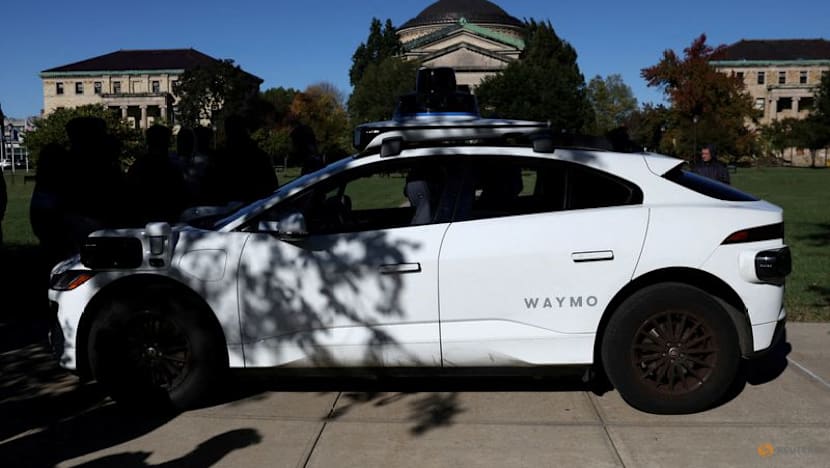
Alphabet's Waymo said on Wednesday it will begin offering robotaxi rides that use freeways across San Francisco, Los Angeles, and Phoenix, as it steps up expansion amid competition in the self-driving industry.
Waymo, which already operates in parts of the San Francisco Bay Area, is also extending operations to San Jose, including Mineta San Jose International Airport, the second airport in its service area after Phoenix Sky Harbor.
The move comes as Tesla expands its robotaxi service with safety monitors and drivers, and Zoox—backed by Amazon—offers free robotaxi rides on and around the Las Vegas Strip.
Waymo is the only company that runs a paid robotaxi service in the U.S. without safety drivers or in-vehicle monitors. It has a robotaxi fleet with more than 1,500 vehicles.

Airport Service: Waymo expanded to San Jose Mineta International Airport, adding to its existing airport service at Phoenix Sky Harbor.
Fleet Growth: Waymo’s fleet has grown to over 1,500 vehicles, with more than 1,000 robotaxis dedicated to the Bay Area.
No Safety Drivers: These freeway rides are offered without onboard safety drivers or monitors, making Waymo the only U.S. company running a paid robotaxi service at this scale.
Future Expansion: Waymo plans to extend freeway capabilities to Austin, Atlanta, Dallas, Nashville, Miami, and Washington, D.C., and even internationally to London in 2026.
| Company | Tech Approach | Passenger Service | Scale & Fleet | Expansion Plans |
|---|---|---|---|---|
| Waymo (Alphabet) | Multi‑sensor system (lidar, radar, cameras) | Paid, fully driverless rides since 2020 (Phoenix, SF, LA) | ~1,500 vehicles, >250,000 weekly rides | Freeway rides in LA, SF, Phoenix; expanding to Austin, Atlanta, London (2026) |
| Tesla | Vision‑only (cameras, no lidar/radar) | Cybercab service launching 2025 in Austin, initially with safety monitors | Uses consumer fleet integration; not yet scaled robotaxi fleet | Plans rapid rollout via existing Tesla cars |
| Zoox (Amazon) | Purpose‑built bi‑directional pods | Free pilot rides in Las Vegas Strip area | Limited fleet, pilot‑only | Future commercial rollout TBD; focus on comfort and design |

.jpg)





0 Comments